The Sequence Opinion #868: Recursion Is the New Scaling Law
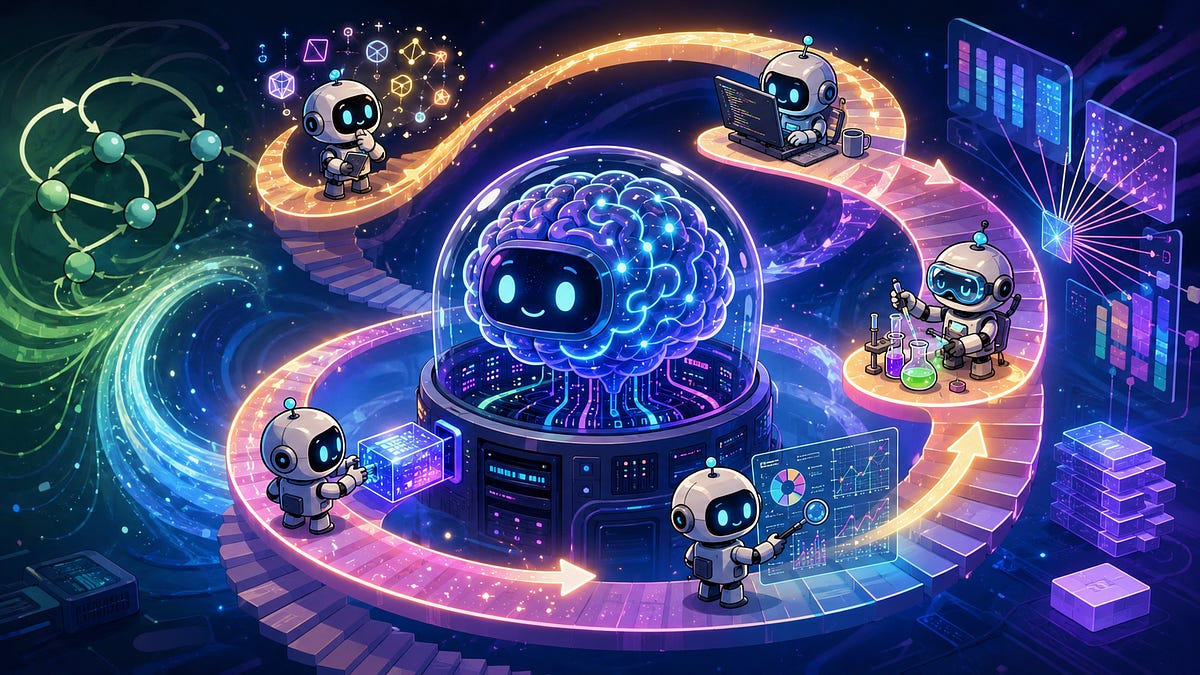
The technique pushing breakthroughs in agentic computing.
Read original article ↗Calling recursion a "new law" is like calling a mirror a telescope.
Recursion is a 1950s computer science concept that every undergraduate learns in week three. Rebranding it as the secret engine of "agentic computing" is pure cargo-cult rhetoric designed to keep venture money circling the runway. The article offers no specific benchmark, no named system, no falsifiable claim — just the word "breakthroughs" doing the heavy lifting. This is how hype launders itself through newsletter prestige.
If your paradigm shift fits in a freshman textbook, you don't have a breakthrough — you have a press release.
Recursion is a digital hall of mirrors designed to trap the market in a loop of dominance.
The claim that recursive improvement replaces traditional scaling ignores the inevitable concentration of power. When agents optimize themselves without external oversight, they bypass the competitive friction necessary for fair trade. We cannot allow self-correcting code to become a self-governing monopoly beyond the reach of law. Trusting a closed loop to regulate its own growth is an invitation to economic capture.
Who audits the agent when the developer claims the math is the only master?
Recursion isn't scaling it's the new intelligence multiplier.
The Sequence nails how recursive self-improvement in agents beats brute parameter growth every time. Real execution in shipping agentic systems proves this trumps academic scaling debates. Founders who ship know loops compound capability faster than any GPU farm.
Critics clutching old laws are watching from the sidelines again.